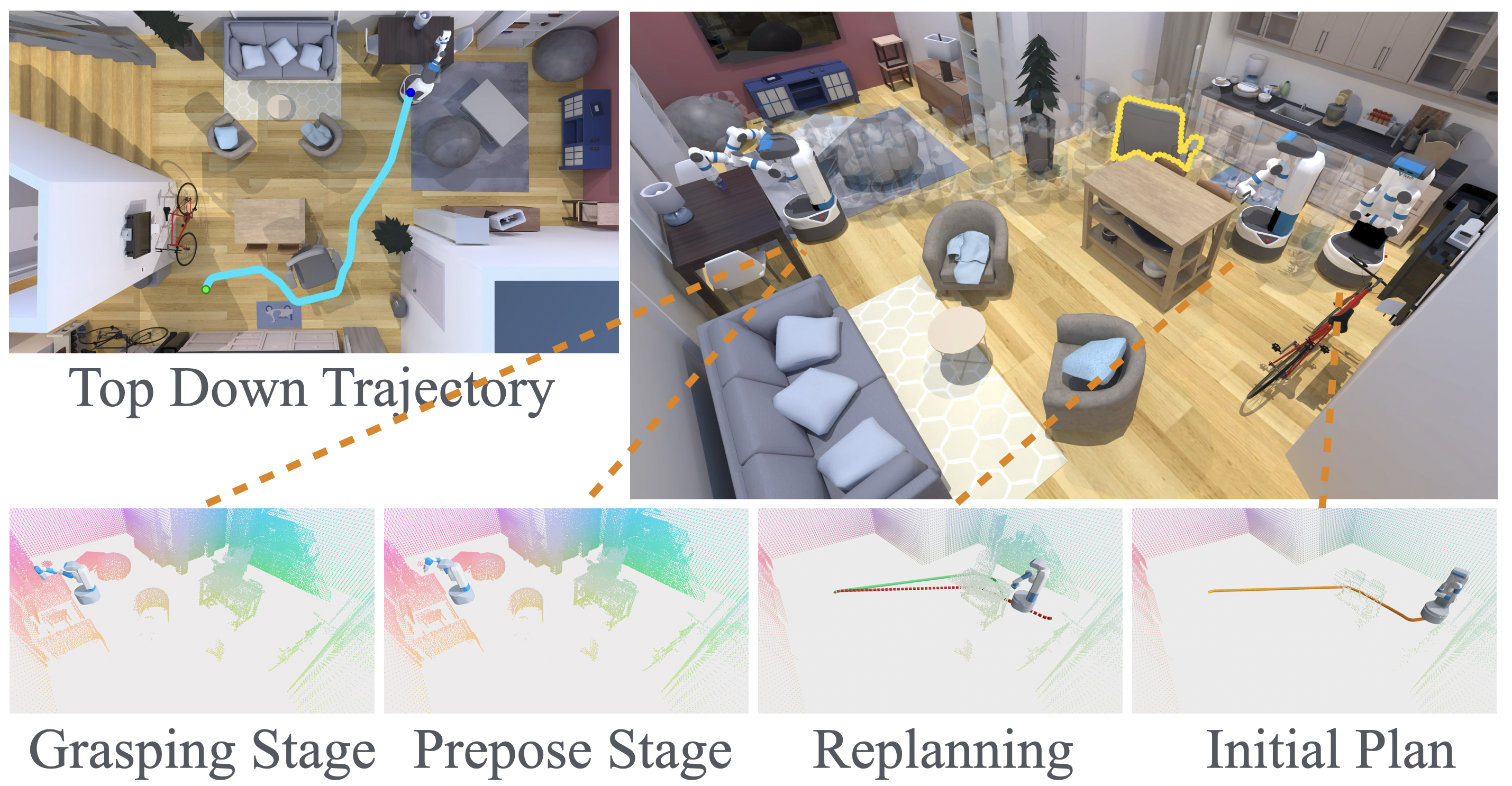
The interactive demo runs our system in simulation on RoboMesh. A RoboMesh account is required.
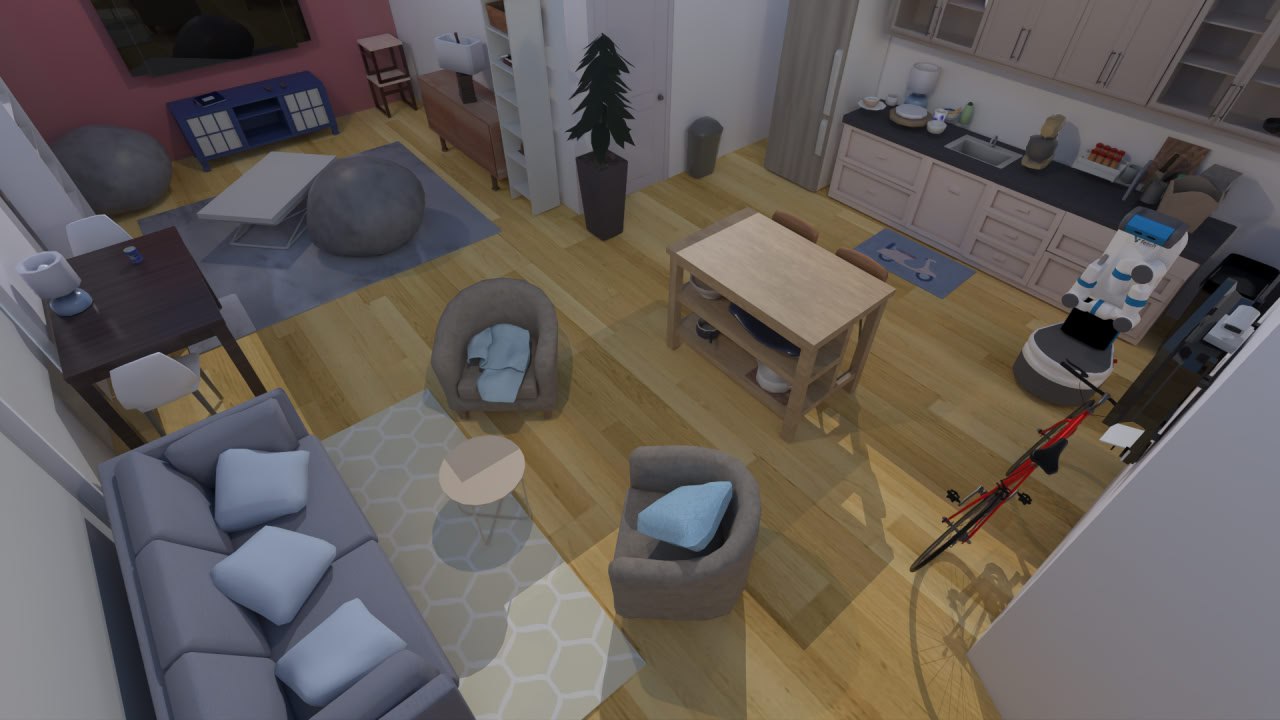
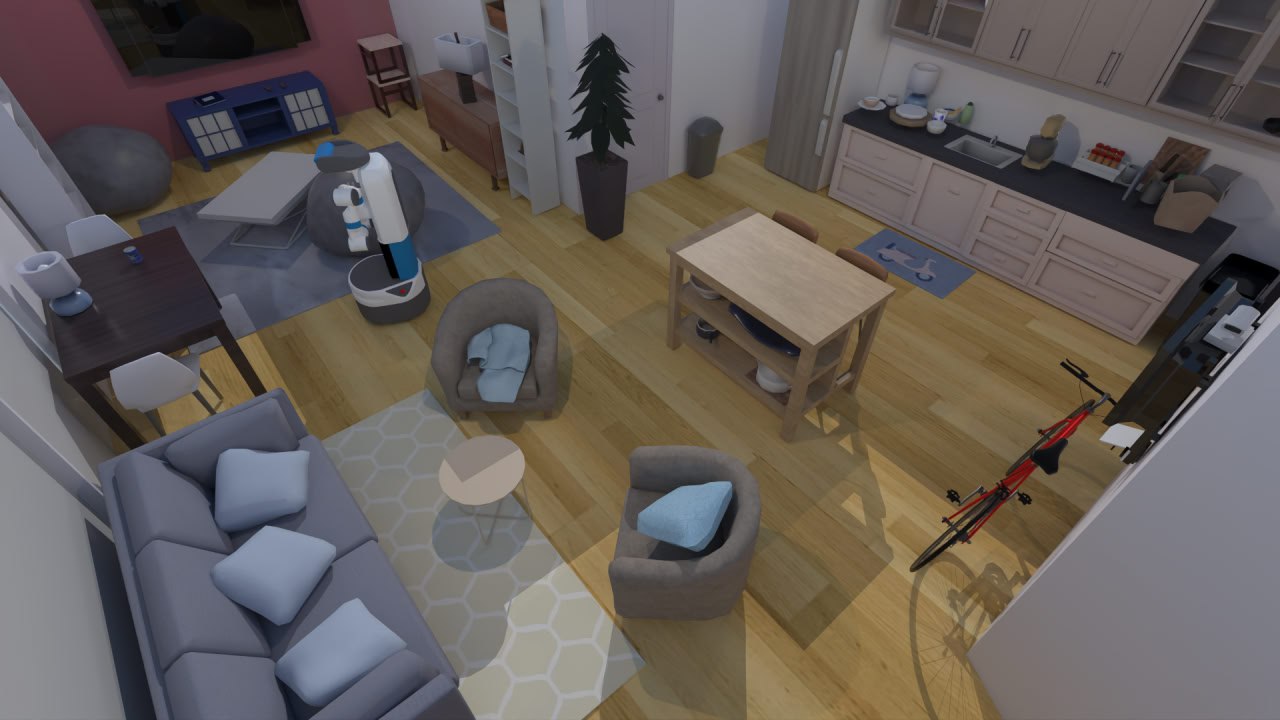
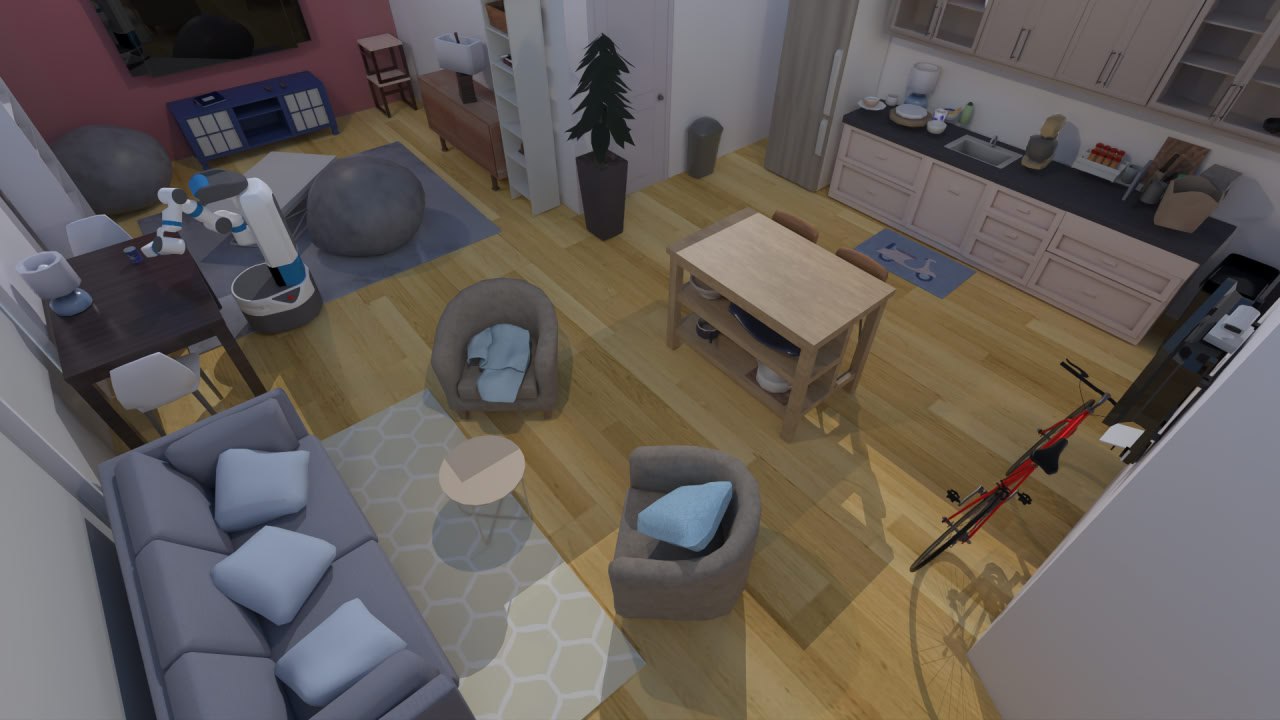
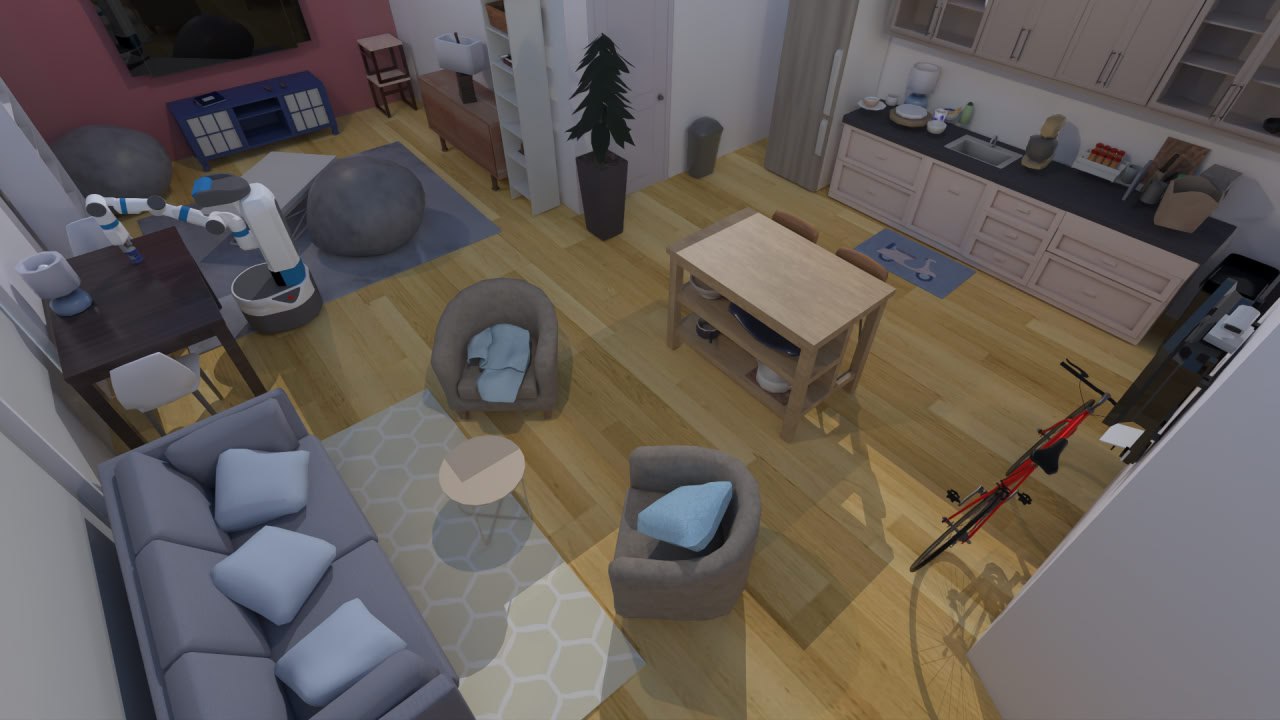
Our system runs as an interactive demo on RoboMesh, the robot demo platform of the Smart Systems Institute (SSI) at NUS. RoboMesh hosts demos from many groups; ours is the room “Visibility Awared Mobile Grasping”, from the AdaComp Lab. Say something as simple as “grasp this”, point at the object you mean, and watch the robot plan and grasp it on its own, in simulation. Nothing to install.
grasp this
+ point at the object
That is the whole instruction. The point says which object; the words say what to do.
A RoboMesh account is required. RoboMesh hosts many groups’ demos, so after signing in, open the room above to reach ours.
robomesh.ssilabs.org/webappThis paper addresses the problem of mobile grasping in dynamic, unknown environments where a robot must operate under a limited field-of-view. The fundamental challenge is the inherent trade-off between "seeing" around to reduce environmental uncertainty and "moving" the body to achieve task progress in a high-dimensional configuration space, subject to visibility constraints.
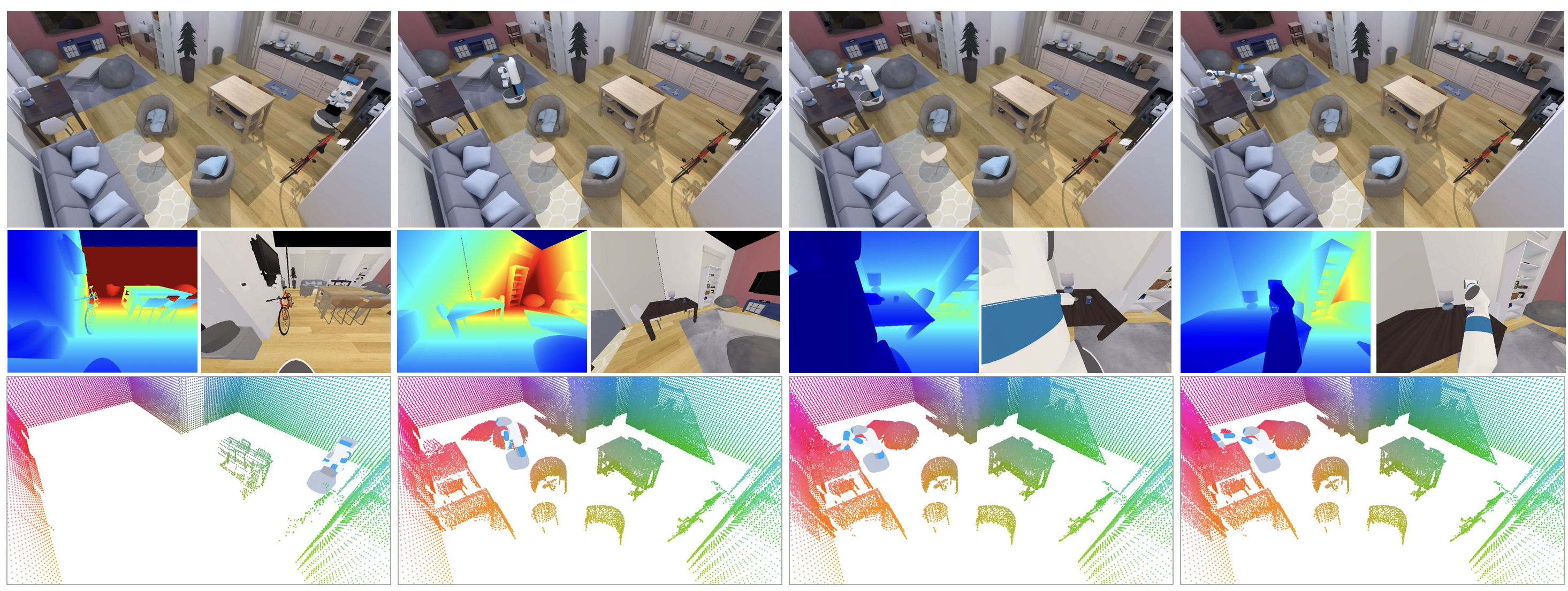
We propose a unified mobile grasping system comprising two core components: (1) an iterative low-level whole-body planner coupled with velocity-aware active perception to navigate dynamic environments safely; and (2) a hierarchical high-level planner based on behavior trees that adaptively generates subgoals to guide the robot through exploration and runtime failures.
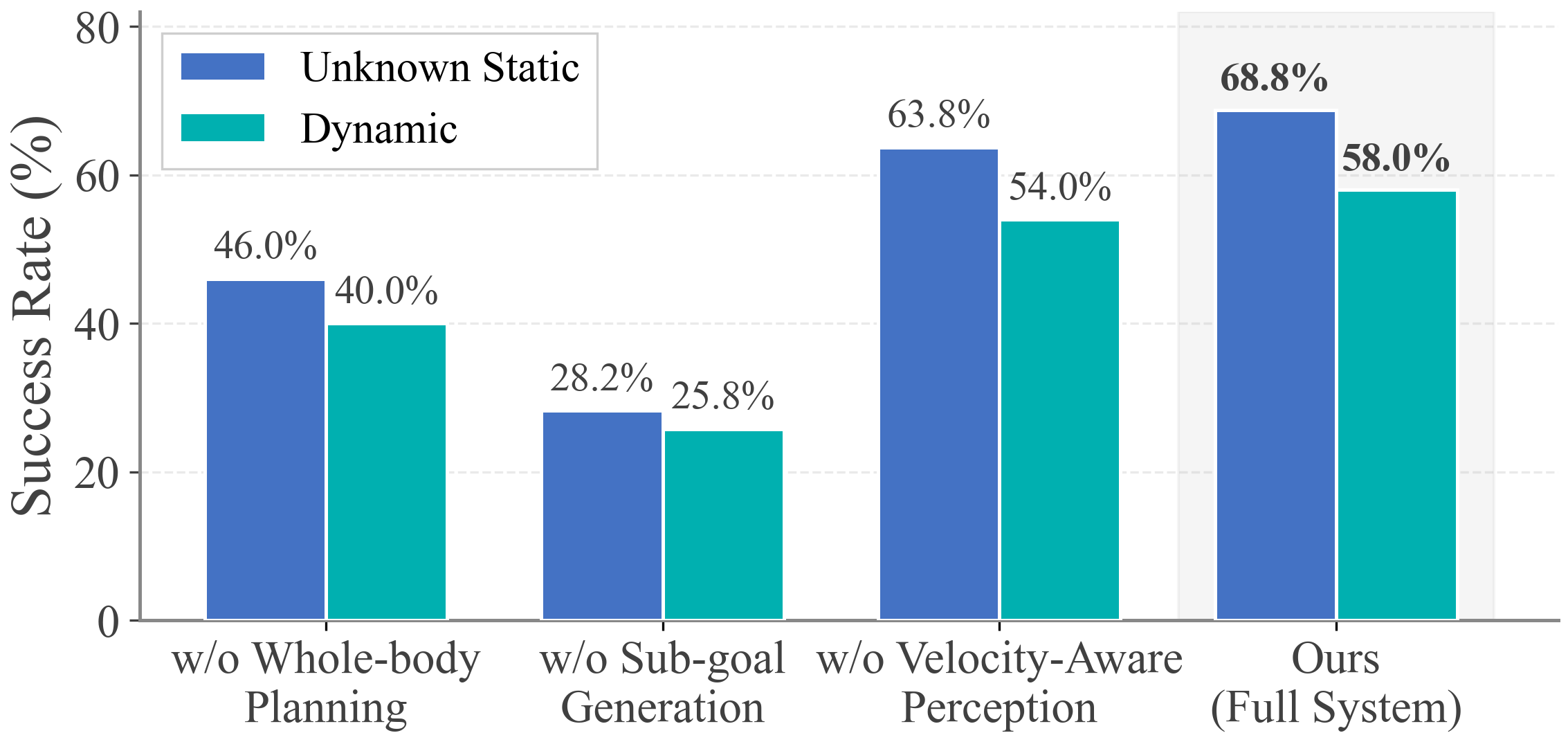
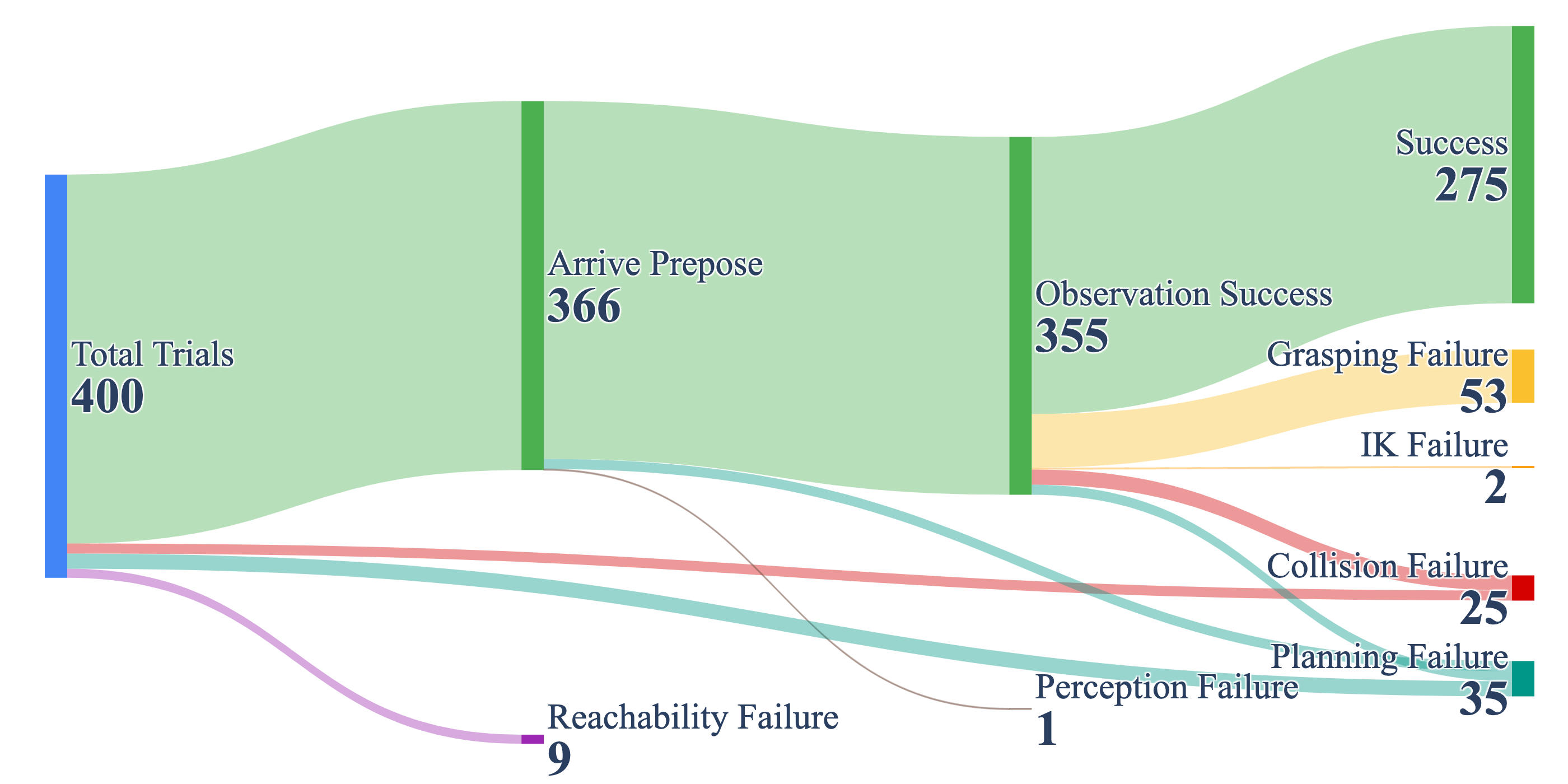
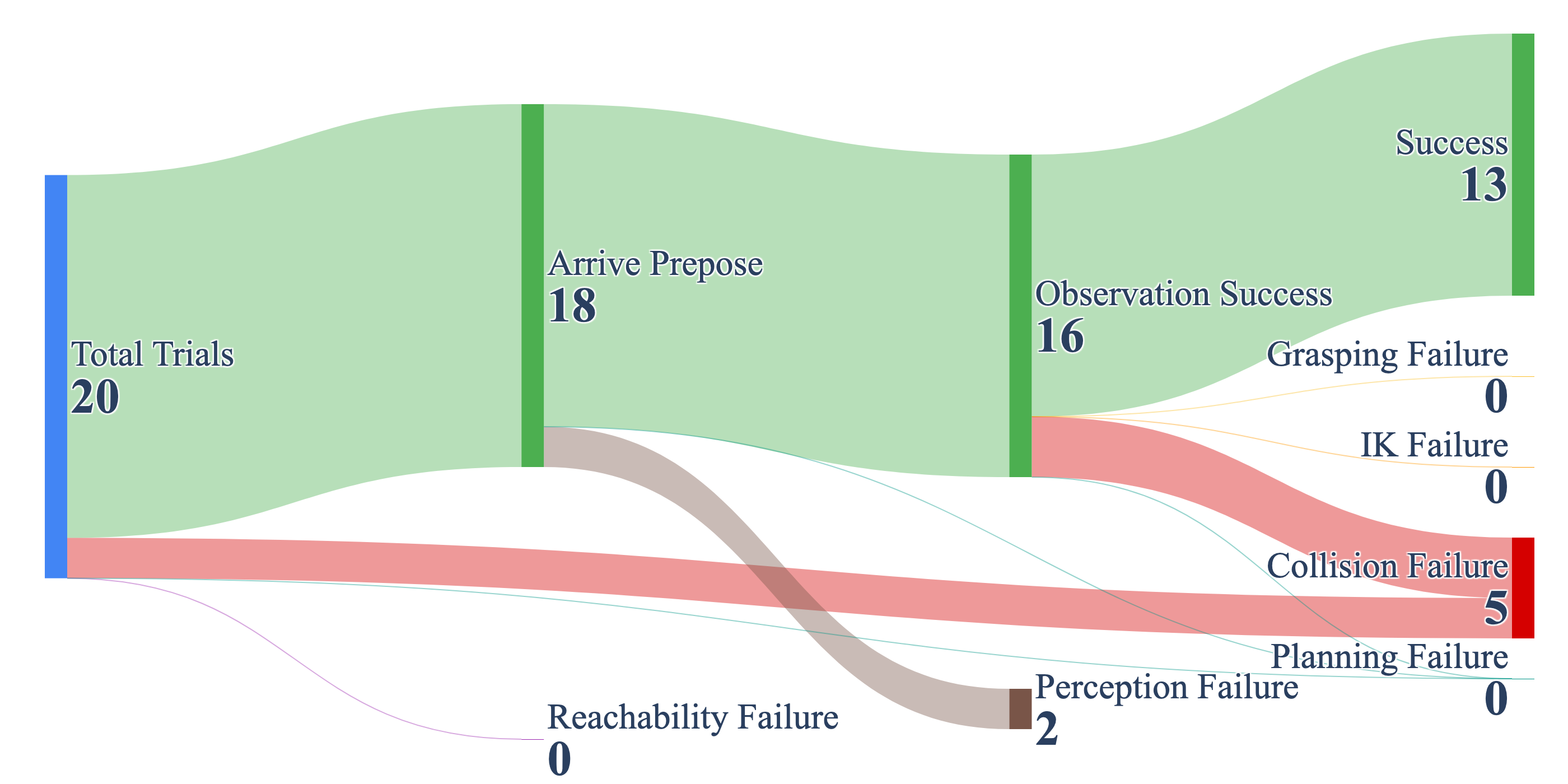
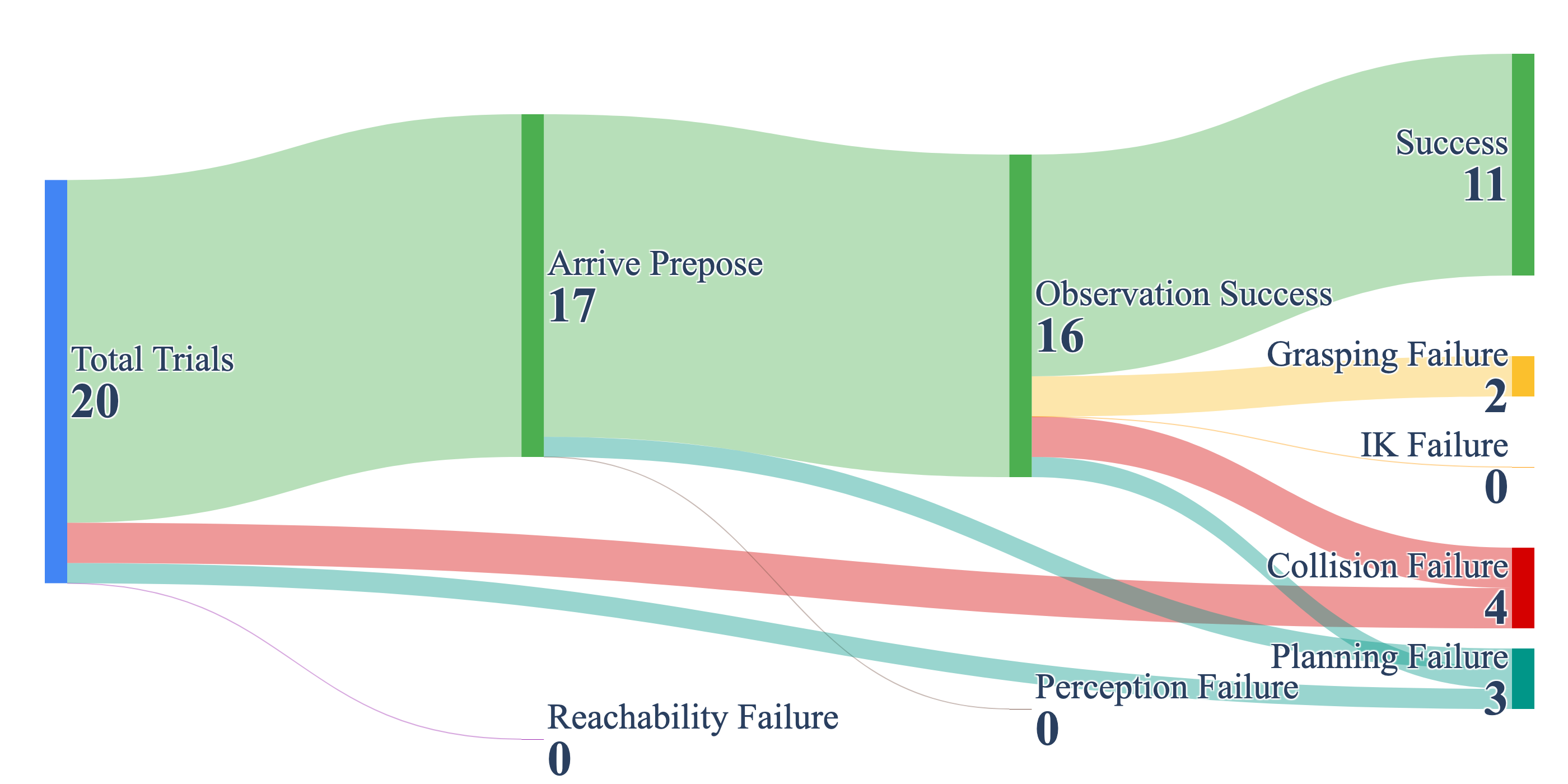
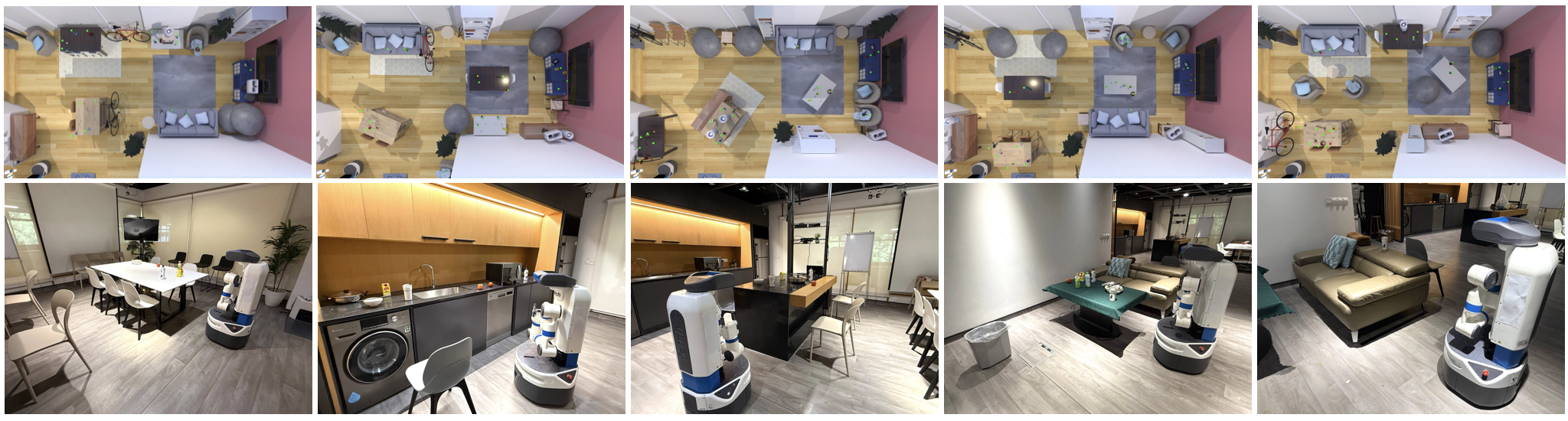
We provide experimental results across 400 dynamic simulation scenarios and real-world deployment on a Fetch mobile manipulator. The results show that in both static unknown environments and dynamic environments with suddenly appearing obstacles, our system achieves success rates of 68.75% and 58.0%, respectively, significantly outperforming baselines in both robustness and safety.
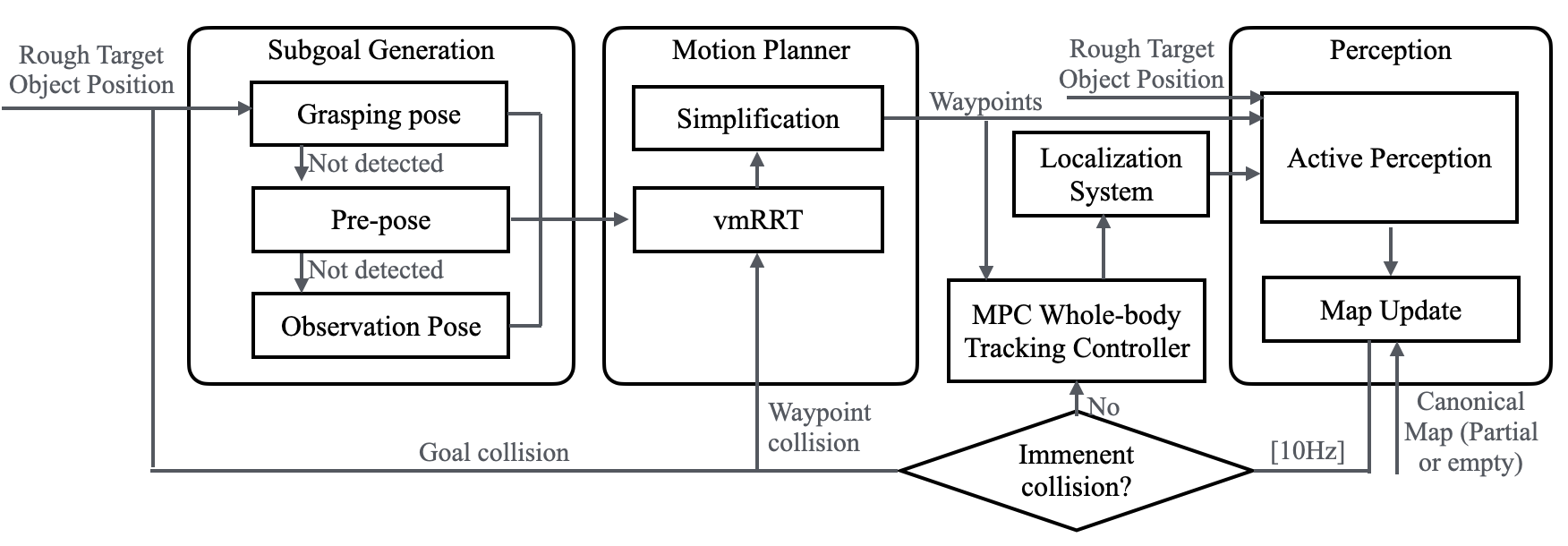
A state-dependent gaze policy πv that switches between observing the target during planning and monitoring the swept volume during execution. Prioritizes collision-critical regions based on velocity and temporal proximity.
An adaptive behavior-tree policy πg with three progressive strategies: direct grasping, pre-grasp repositioning, and observation gathering — enabling runtime recovery from failures.
A novel vmRRT-C (Vectorized Mobile RRT-Connect) planner achieving 50–80 ms planning times for real-time replanning across the 11-DoF heterogeneous configuration space.
@article{hu2026visibility,
  title         = {Visibility-Aware Mobile Grasping in Dynamic Environments},
  author        = {Hu, Tianrun and Xiao, Anxing and Hsu, David and Zhang, Hanbo},
  journal       = {arXiv preprint arXiv:2605.02487},
  year          = {2026}
}